
I Have a Low Credit Score and Want to Consolidate My Debt. Will I Qualify?
This is a real question we received on WhatsApp recently, and it’s something we hear often. Many South Africans with low credit scores feel overwhelmed by multiple accounts and believe a single consolidation loan is the solution. But the truth may surprise you.
The Misunderstanding About Consolidation Loans
Many people think debt consolidation loans are designed for those who are already battling. In reality, only clients with affordability and a good credit score qualify. When lenders assess an application, they check whether you have room in your cash flow to handle additional credit.
A common myth is that you can take out a loan to cover arrears and simply “pay one person.” But once you’re in arrears, you’re flagged as a slow payer — and no lender will advance more credit until those arrears are settled.
What Really Determines Qualification
Your credit score isn’t the only factor. Lenders also assess your debt-to-income ratio to determine whether you can afford additional credit.
At Premier Finance, our lending partners generally require your total monthly debt repayments to remain below 40% of your income.
If your existing repayments exceed this limit, you may not qualify for another loan, as additional borrowing could place you under further financial pressure.
Debt Restructuring: The Alternative That Works
With debt restructuring, your current creditors are approached to negotiate lower instalments and interest rates. In many cases, interest can drop to as low as 9% — and sometimes even 0%.
That means instead of taking 7–10 years to clear debt at high rates, clients can get out of debt in 3–5 years. Best of all, they no longer need to take on additional loans just to survive.
Real Relief, Without a Loan
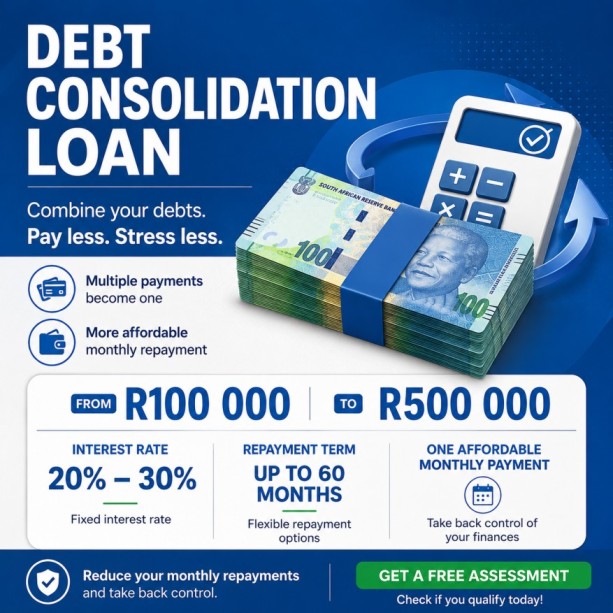
Yes, some clients do qualify for a debt consolidation loan. But those loans usually come at interest rates of 27% or higher — which often costs more in the long run.
For most low-score clients, debt restructuring is the smarter path. It provides:
- Lower instalments
- More breathing room in the budget
- A timeline to becoming debt-free
What You’ll Need to Apply
If you still want to check your loan options, you’ll need:
- 3 months’ bank statements
- Recent pay slips
- A copy of your ID
Your credit score should also be above 650. But if you’re already falling behind on payments, the better solution is to look at debt restructuring first.
A Case Study: From Decline to Success
We worked with a client who applied for a debt consolidation loan but didn’t qualify. Instead, we gave her a restructuring plan. The result? She freed up R14,000 a month in her budget — enough to cover all her debt, living expenses, and even start saving. She no longer needed loans to get by. For the first time in years, she lived on cash and felt in control.
The Pattern We See
From over a decade in this field, one thing stands out: many low-score clients apply everywhere they can, hoping for a loan. After years of rejections, they finally turn to debt restructuring — only to wish they’d done it sooner. If you’re in this position now, don’t wait. The sooner you start restructuring, the sooner you can rebuild your credit and qualify for credit again in the future.
Final Word
A low credit score doesn’t mean you’re stuck. It just means a different approach is needed. Debt restructuring allows you to consolidate your debt, reduce your interest, and create space in your budget — without taking on more credit.
If you’re ready to explore your options, complete our short assessment form today and let’s find the right solution for your situation.👇
Frequently Asked Questions About Debt Consolidation With Bad Credit
Can I get a consolidation loan with bad credit in South Africa?
Qualifying for a consolidation loan with bad credit can be difficult. Your credit history, existing repayments and affordability all play a role. Premier Finance can assess your circumstances and explore which debt consolidation solutions may be suitable.
Are there debt consolidation options for people with low credit scores?
Yes. Depending on your circumstances, there may be debt-management options beyond a traditional consolidation loan. The right approach depends on your financial position and the type of debt you’re managing.
Can I apply for a high-risk debt consolidation loan with no credit check?
Legitimate credit providers assess affordability and credit risk before approving loans. If your credit profile makes traditional borrowing unsuitable, Premier Finance can help you explore alternative debt solutions.
What happens if my debt consolidation loan application is declined?
A declined application doesn’t necessarily mean you have no options. Understanding why you were declined can help identify whether a different debt-management solution would be more appropriate.
Can debt consolidation help when I'm struggling with multiple repayments?
Debt consolidation or restructuring may help simplify how your debt is managed. The appropriate solution depends on your existing obligations, affordability and credit circumstances.
How do I find out which debt consolidation solution is suitable for me?
Start with a Premier Finance assessment. We can review your circumstances and explain which available solutions may be appropriate, subject to eligibility and provider criteria.